Navigating the Basics of Seeking Leave to Appeal in the Court of Appeal
- Kristy Mclaren
- Aug 1
- 2 min read

Hi Everyone, it's Kristy from Clearly Legal.
Let's talk today about the Leave to Appeal.
When you want to challenge a decision made by a lower court, you often need permission first. This permission is called leave to appeal. Understanding how to properly seek leave to appeal in the Court of Appeal can ensure you are in compliance and your materials are being accepted, and are on time.
Though the rule review may be changing some of duedates, the key steps still seem to be play, and we'll be learning together on things that change.
What Does Leave to Appeal Mean?
Leave to appeal means you must ask the court for permission before you can appeal a decision.
This process applies to appeals to the Court of Appeal and sometimes to the Divisional Court. Please do your research to know if you are going to the Court of Appeal or Divisional Court, and if you need to seek leave (yes, lawyers, I can help you with this).
Starting the Leave to Appeal Process
The first step is to serve and file a notice of motion for leave to appeal. This is a formal written request asking the court to grant permission to appeal.
Here are the key deadlines you must follow:
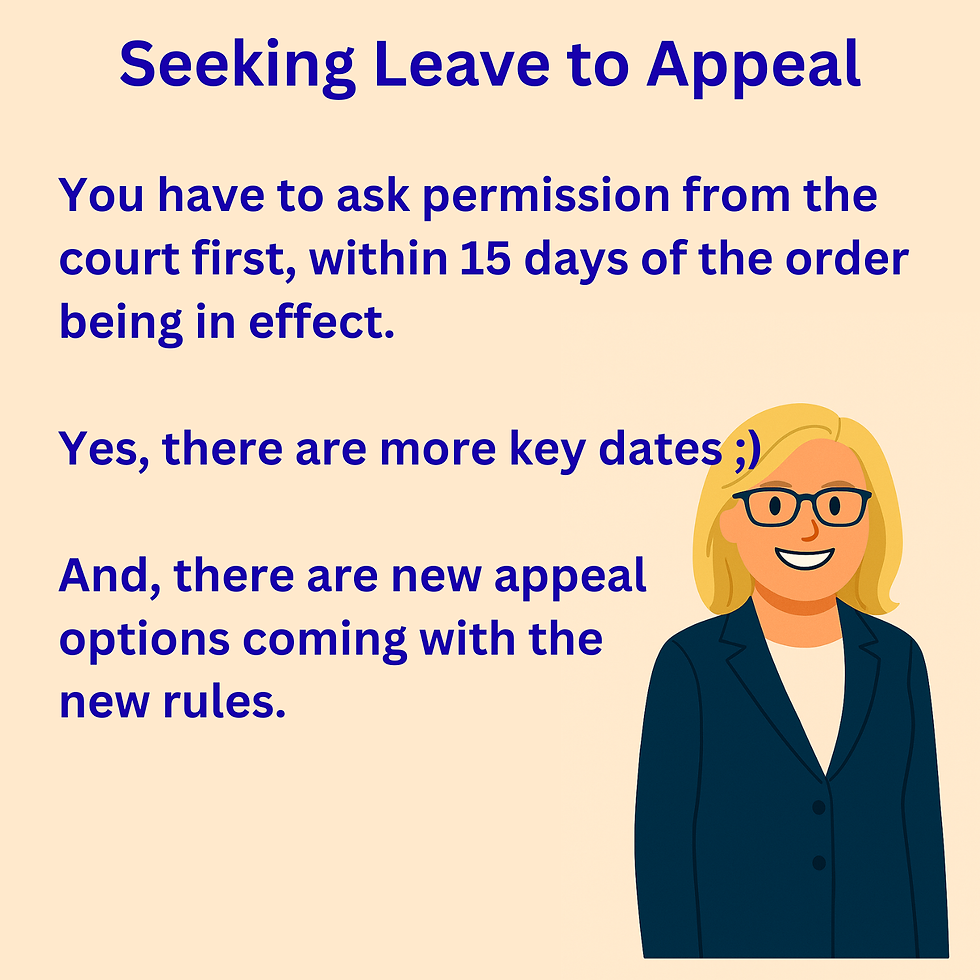
Serve the notice of motion within 15 days from the date of the order you want to appeal.
File the notice within 5 days after serving it.
Missing these deadlines can mean losing the chance to appeal, so it’s crucial to act quickly.
What Goes Into the Notice of Motion?
The notice of motion must clearly state why you believe the court should grant leave to appeal. This includes:
The order or decision you want to appeal
The grounds for your appeal (legal errors, misinterpretation, procedural issues)
Any supporting facts or evidence
This motion is submitted in writing.
Preparing the Motion Record and Factum
Once you file the notice of motion, you have 30 days to serve and file the motion record and factum. These documents provide the court with detailed information about your case.
The motion record includes all relevant documents, such as the notice of motion, affidavits, and exhibits.
The factum is a written argument explaining why the court should grant leave to appeal.
You may also need to include a book of authorities (legal cases and statutes supporting your argument) and transcripts from the original hearing.
Lawyers, you need help, you need experienced help, you need me. Contact me at kristy@clearlylegal.ca and we'll chat.
Disclaimer: This post provides general information about alternative service of legal documents from a law clerk. It is not legal advice. For advice specific to your situation, please consult a lawyer or active licensed paralegal.