The Importance of Schedule D in Simplified Rules (SR) Affidavit of Documents

Hi Everyone, it's Kristy from Clearly Legal.
While the new streams may change how Simplified Rules operates, right now, we still have Rule 76 and Schedule D.
Let's briefly refresh on what the Affidavit of Documents is
Simplified Rules currently manages litigation claims for money or property less than $200,000.00 (let's remember the $50,000.00 Small Claims cap). Simplified Rules tries to keep to specific duedates to help the process moving smoothly.
One key document in this process is the Affidavit of Documents. This affidavit lists all relevant documents that a party has in their possession, control, or power related to the case. It helps both sides understand what evidence exists and what might be shared during discovery.
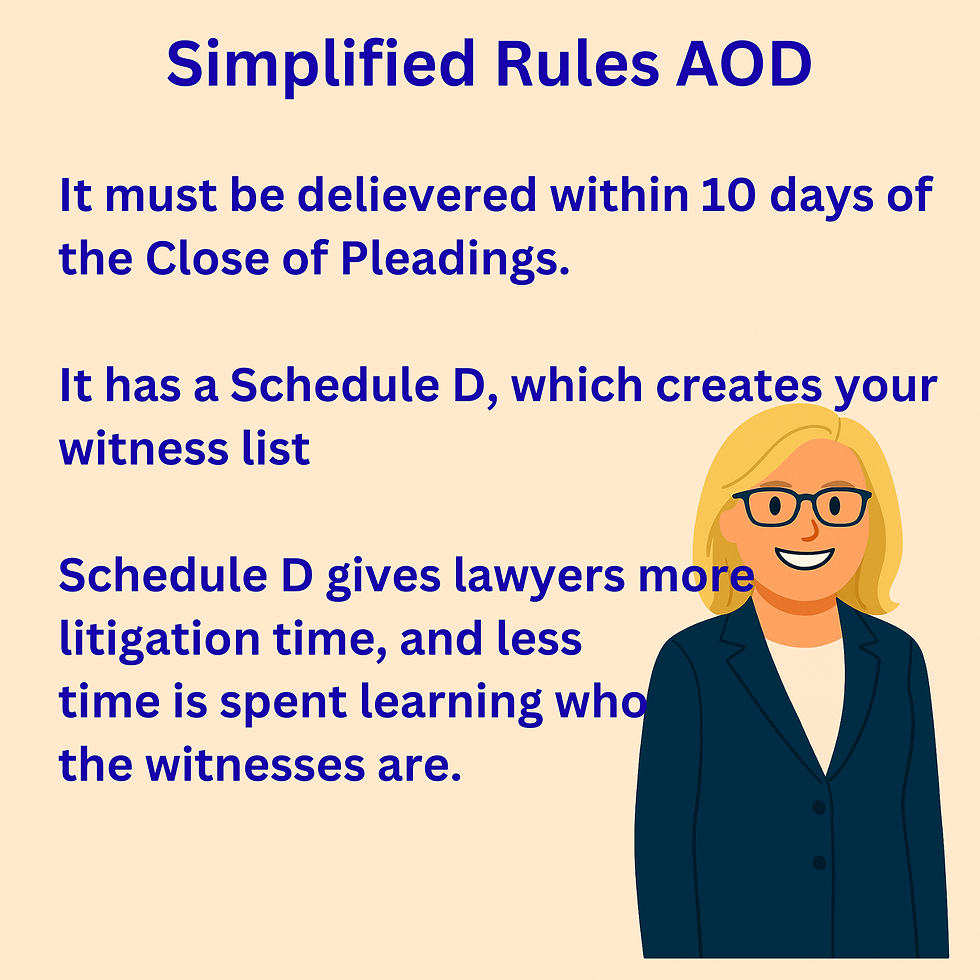
Under Simplified Rules, the Affidavit of Documents must be delivered 10 days after the close of pleadings. This deadline is stricter than in ordinary rules, where no specific timing is set. (let's be real, many times lawyers and files do not hit this 10 days...but it is one of the ways SR tries to be faster).
Now, let’s explore what Schedule D is.
What Is Schedule D and Why Is It Important?
Schedule D is an additional part of the Affidavit of Documents unique to the Simplified Rules. It requires you to list:
The names of witnesses who might have knowledge about the events in dispute
Their contact information, such as phone numbers or email addresses
This list is not just a formality. It serves a practical purpose: to help lawyers focus their time on the litigation itself rather than spending hours asking questions about potential witnesses during oral discoveries.
How Schedule D works to help
Limits oral discovery time: Oral discoveries under Simplified Rules have strict time limits. Schedule D helps lawyers prepare by knowing who to question in advance.
Speeds up the process: By providing witness details early, you reduce delays caused by searching for witnesses later.
Improves case strategy: Knowing who might have relevant information helps you plan your questions and evidence gathering more effectively.
Reduces surprises: Both parties get a clear picture of potential witnesses, which lowers the chance of unexpected testimony.
How Schedule D Differs from Other Schedules
The Affidavit of Documents under Simplified Rules still includes Schedules A, B, and C:
Schedule A: Documents you have and will produce
Schedule B: Documents you have but will not produce, with reasons
Schedule C: Documents you once had but no longer do
Schedule D stands apart because it focuses on people, not documents. This addition reflects the Simplified Rules’ goal of making discovery more straightforward and less time-consuming.
Lawyers, you know the best use of time and money is to have a seasoned litigation law clerk on the AOD. You need experienced help, you need me. Contact me at kristy@clearlylegal.ca and we'll chat.
Disclaimer: This post provides general information about alternative service of legal documents from a law clerk. It is not legal advice. For advice specific to your situation, please consult a lawyer or active licensed paralegal.